


The Binder Practices of Lading: a Complete Guide for the Student of Machines
Table of contents
El periodo de prácticas a bordo es uno de los momentos más determinantes en la formación de cualquier futuro oficial de máquinas.Es un periodo de vital importancia donde el alumno debe aprovechar cada guardia para desarrollar competencias técnicas y operativas que difícilmente pueden adquirirse en el aula.
The cuaderno de prácticas de embarque it is the tool that structure this learning: un registro sistemático de tareas realizadas, parámetros observados and procedures followed, which acredita ante la institución formativa la experiencia adquirida a bordo y sirve de guía al alumno para no dejar ninguna área crítica sin cubrir.
Esta guía recoge el contenido estándar de los cuadernos de embarque utilizados en los programas de formación náutico-pesquera y marina mercante, alineados con los requisitos de competencia del STCW convention (Standards of Training, Certification and Watchkeeping). Supplementing what has already been published in 10 Tips for the New Marine.
1. ¿Cómo Usar el Cuaderno de Prácticas de Embarque o Libro de Formación a Bordo?
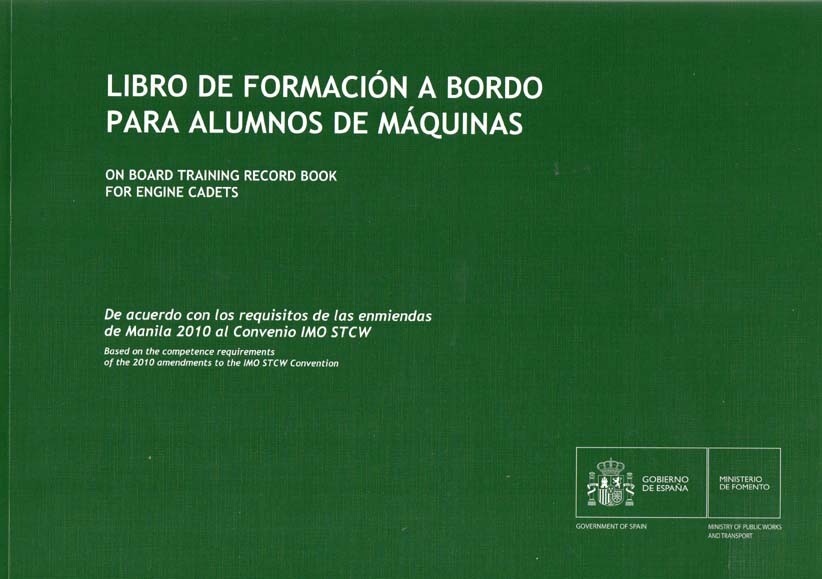
This guía es orientativa y está diseñada para mejorar la familiarización y adaptación del alumno al buque desde el primer día de embarque.
The general procedure is as follows:
Once on board, el alumno deberá conocer el buque y cumplimentar los datos técnicos recogidos en el apartado de datos del buque. A continuación ejecutará las tareas prioritarias de familiarización y seguridad, which need to be addressed en las primeras 24-48 horas de embarque sin excepción.
To cada tarea realizada se anotará la fecha de ejecución y un breve comentario sobre su desarrollo, señalando dificultades encontradas, procedimientos seguidos y aspectos de interés observados.
Las tareas que no puedan realizarse por no corresponder al tipo de buque asignado se dejarán en blanco y se indicará el motivo. Once completedthe notebook se entregará al tutor o profesor responsable in the format set by the training centre.
2. Datos del Alumno de Máquinas
The notebook should incluir los datos de identificación student:
- Date of birth and ID number.
- Número de Libreta Marítima.
- Home.
- Asignaturas aprobadas y fechas de superación.
- Cursos académicos realizados.
- Special courses and certificates obtained (STCW, básico de seguridad, lucha contraincendios, primeros auxilios, etc.)
3. Datos Técnicos del Buque
One of the primeros ejercicios prácticos del alumno it is the recopilación de los datos técnicos del buque. This work forces you to revisar the general plans, the record of the ship and manuales de máquinas, and contributes directly to the familiarización con el equipo asignado.
Identificación
- Nombre del buque, numeral de llamada y número MMSI.
- Matrícula y folio.
Características Principales
- Tipo de buque y clasificación.
- Displacement in the thread.
- Tonnage Gross tonnage (GRT).
- Length between perpendiculars, manga and strut.
Capabilities
- Fuel, oil and drinking water.
- Distilled water and ballast tanks.
Propulsión
- Tipo de motor, número de cilindros y potencia nominal.
- Velocidad de servicio y consumo específico (kW/h).
- Type of fuel and shutter horn.
Survival equipment and Safety
- Número de botes salvavidas y capacidad por bote.
- Capacity of the life rafts.
Cover equipment and Government
- Maquinillas y grúas: número y capacidad.
- Servomotor, timón y diámetro de mecha.
- Molinete: tracción, velocidad y peso. Anclas y diámetro de cadena.
Ancillary Services
- Compresores de aire: número, tipo y capacidad de botellas.
- Generadores auxiliares: número, tipo y potencia.
4. Tareas Prioritarias de Familiarización y Seguridad
These tasks need to be run in each vessel, in the first hours after the shipment. Are not optional, nor postergables: su cumplimiento es una obligación de seguridad establecida por el SOLAS and the procedures of the Sistema de Gestión de Seguridad (SMS) de la compañía.
- Leer detenidamente el Manual de Seguridad y el Manual de Formación de la compañía. Revisar los planes de lucha contra-incendios.
- Read the manuals of survival of the ship.
- Identificar las señales de emergencia y conocer los cometidos asignados en el Cuadro de Obligaciones y Consignas para los casos de fuego, emergencia general y abandono del buque.
- Locate, verify, and adjust the vest to be assigned.
- Localizar los equipos de supervivencia y familiarizarse con su operación.
- To know the procedure to follow in case of Man overboard.
- Identify the lifeboat assigned.
- Localizar el punto de reunión de Abandono y el de Incendio.
5. Familiarización General con la Cámara de Máquinas
Once covered the tasks of immediate safety, el alumno debe familiarizarse con la sala de máquinas as the working space:
- Reconocer la distribución general de la cámara de máquinas y las rutas y salidas de emergencia.
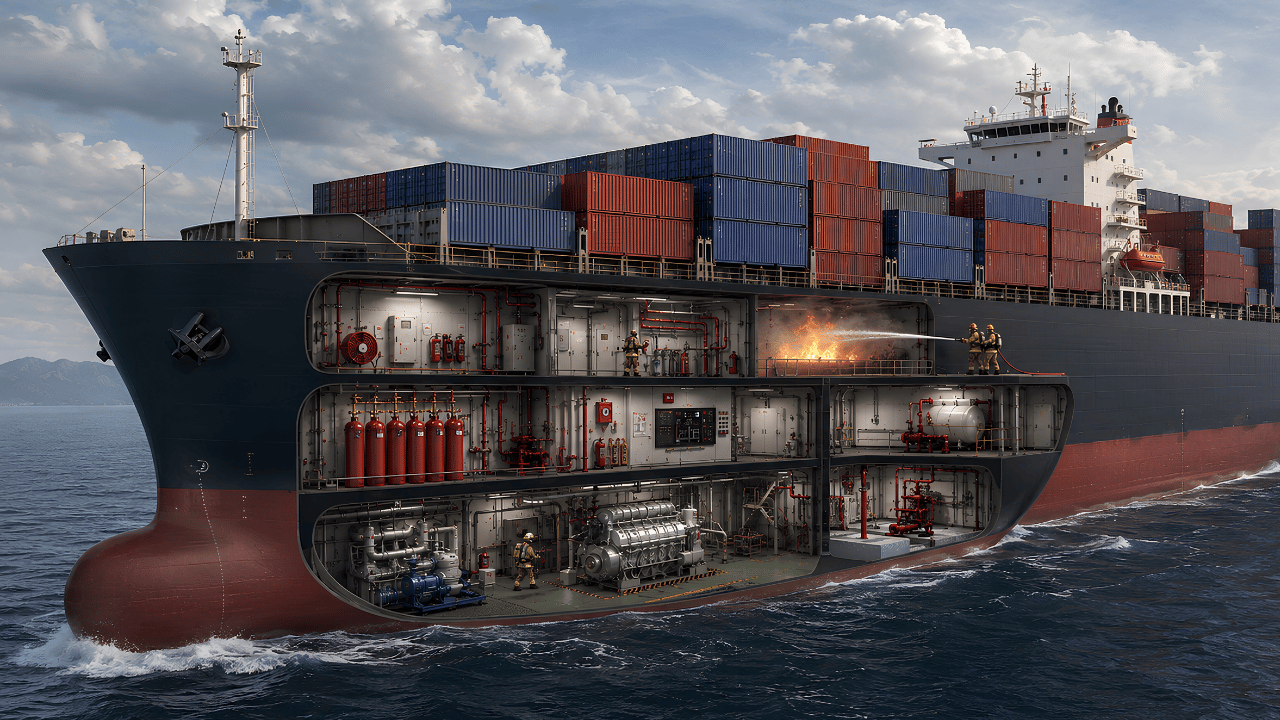
- Localizar los equipos de contraincendios: extintores, mangueras, equipos de bombero y aparatos de respiración autónoma.
- Identificar los diferentes tipos de alarmas de la cámara de máquinas y conocer el protocolo de actuación en cada caso.
- Familiarizarse con los sistemas fijos de extinción de incendios y sus puntos de accionamiento.
- Conocer los procedimientos de transferencia de control de Puente a Máquinas, variación de régimen y parada de emergencia.
- Revisar la disposición del system of government. Participate in the mandatory pre-departure and in the shift to emergency government.
- Locate and operate the drive system of doors and hatches watertight.
- Operation of the emergency fire pump and verify its operation.
- Localizar el generador y las baterías de emergencia. Participar en sus pruebas periódicas de arranque automático y manual.
- Inspect and start the engine of the lifeboat assigned.
- To locate the emergency stop of fans, pumps transfer and válvulas de cierre rápido de fuel oil.
- Familiarize yourself with the system bilge pump bilgein normal mode and emergency, including cofferdams.
6. Tareas de Operación y Supervisión
6.1 Main Engine
El motor principal es el núcleo de la sala de máquinas y la máquina que mayor atención exige durante las guardias. El alumno debe:
- Participar en la preparación del motor para su puesta en marcha: comprobación del cuadro de control y alarmas, detector de niebla de aceite en cárter (OMD), sistemas de arranque neumático y válvulas de seguridad.
- Verificar que herramientas y piezas de repuesto están correctamente estibadas y trincadas.
- Operar los controles del motor principal en respuesta a las órdenes de puente y ajustar el régimen de marcha.
- Registrar los parámetros de funcionamiento en el diario de máquinas.
- Practicar el cambio entre modo manual y automático, y entre control local y remoto.
- Ejecutar el cambio de combustible de gasóleo (DO) a fuel oil (FO) al pasar de maniobra a régimen de mar, y viceversa.
- Colaborar en la toma de diagramas cerrados y abiertos y en los cálculos derivados.
- Take samples of water, oil and fuel and to participate in its análisis.
- Realizar guardias de máquinas seguras, siguiendo los procedimientos del SMS.
6.2 Generadores y Sistemas Eléctricos
- Participar en la preparación, puesta en marcha, sincronización, conexión a barras y reparto de cargas de los generadores auxiliares.
- Reconocer los parámetros normales de funcionamiento de generadores y motores auxiliares.
- Participar en la desconexión y parada del grupo electrógeno.
- Conocer la secuencia de reducción de carga del cuadro eléctrico y distinguir servicios esenciales de no esenciales.
6.3 Boiler Auxiliary
- Participar en la puesta en marcha de la caldera auxiliar: revisión previa, encendido y puesta en servicio.
- Realizar revisiones rutinarias: niveles de agua, presión y temperatura de combustible, calidad de la combustión.
- To run the purge and verify the correct operation of the level indicators.
- Participate in the testing of security systems and emergency boiler.
- Tomar muestras del agua de caldera, realizar los análisis pertinentes y participar en el tratamiento químico. Ver también: Recipientes a Presión e Intercambiadores de Calor.
6.4 Compressed-Air System
- To prepare, start and stop air compressors.
- Identificar válvulas de seguridad, discos de ruptura y tapones fusibles en el circuito de producción, almacenaje y distribución.
- Verificar el correcto funcionamiento de las purgas automáticas y la calidad del aire suministrado.
6.5 Sistema de Refrigeración y Aire Acondicionado
- Preparar, poner en funcionamiento y parar los equipos de refrigeración y clima siguiendo los procedimientos correctos.
- Observar y registrar los parámetros de funcionamiento en el diario de máquinas.
- Colaborar en la verificación de los sistemas de protección y seguridad de la planta frigorífica.
6.6 Producción de Agua Dulce y Potable
- Preparar, arrancar y parar los equipos de producción de agua dulce: generator evaporator-condenser and/or system ósmosis inversa.
- Realizar análisis del agua destilada y potable y participar en su tratamiento.
6.7 Prevención de la Contaminación
- Conocer las restricciones de descarga de aguas oleosas según las zonas de navegación establecidas por MARPOL 73/78.
- Realizar el achique de sentinas a través del separador de aguas oleosas y verificar el funcionamiento del sistema automático de vigilancia (15 ppm monitor).
- Participar en la operación del incinerador de residuos.
6.8 Fuel System
- Trasegar combustible de tanques almacén a tanques de decantación, respetando las normas de seguridad, los requisitos MARPOL y la estabilidad del buque.
- Preparar, arrancar y parar el equipo de tratamiento de combustible (separadoras centrífugas).
- Run the change from tank daily intake with the purged correct.
- Participate in operations of supply of fuel (bunker), taking samples and calculating quantities. See: Bunker Survey.
6.9 Alarm Systems and Control
- Practicar el cambio entre modo manual y automático en los lazos de control, la variación de consignas y las comprobaciones rutinarias.
- Realizar comprobaciones periódicas en el cuadro general de alarmas.
7. Tareas de Mantenimiento y Reparación
El mantenimiento preventivo y correctivo es una parte esencial de la gestión de la sala de máquinas. El alumno debe familiarizarse con el maintenance plan of the ship and actively participate in the planned interventions.
7.1 Main Engine
- Assist in the cleaning of turbosoplantes and air coolers.
- Engranar el virador, registrar la operación en el diario y adoptar todas las medidas de seguridad pertinentes antes de virar el motor.
- Realizar, bajo supervisión, inspecciones del cárter y el tren alternativo.
- Colaborar en la medida y registro de las flexiones del cigüeñal.
- Participar en el desmontaje, inspección, medida de huelgos, reparación y montaje de inyectores, válvulas de aspiración y escape, y válvulas de seguridad y arranque.
- Assist in the dismantling, calibration, and installation of pistons, segments, main bearings and bearings of head and foot of the connecting rod.
- Check the status of tighten shoulder straps and bolts of the stand.
- Inspeccionar los colectores de barrido y escape e informar sobre su estado: limpieza, válvulas, purgas, aislamiento y sistema de fijación.
7.2 Generación y Distribución Eléctrica
- Desconectar, aislar y preparar equipos eléctricos para su mantenimiento, registrando la operación.
- Verificar los sistemas de desconexión y protección en cuadros arrancadores.
- Realizar medidas de aislamiento y aplicar procedimientos de corrección.
- Detect, locate and correct referrals to earth.
7.3 Boiler Auxiliary
- Realizar, bajo supervisión, inspección externa e interna de la caldera.
- Preparar la caldera para inspección o reparación: aislamiento, vaciado y apertura.
- Inspeccionar el indicador de nivel y verificar que conexiones, grifos y válvulas no están obturados.
- Participar en el desmontaje, inspección, montaje, prueba y tarado de válvulas de seguridad y alimentación.
- Realizar análisis del agua de caldera y del sistema.
7.4 Compressed-Air System
- To perform maintenance tasks on filters and dryers air system controls.
- Disassemble, inspect, assemble and test compressors.
7.5 Sistemas de Refrigeración y Aire Acondicionado
- Charge refrigerant to the system by following the safety procedures applicable.
- Diagnosticar la presencia de gases incondensables y proceder a su eliminación por purgado.
- Change filters, dehydrators and service elements.
- Assist in the cleaning of evaporators and condensers.
- Desmontar, inspeccionar, reparar y montar un compresor frigorífico.
- Inspeccionar cámaras frigoríficas y verificar la correcta disposición de los productos almacenados.
7.6 Servicios Domésticos
- Participate in the routine maintenance of the separator bilge.
- Participate in the maintenance of the incinerator plant.
- Assist in the maintenance of the plant wastewater treatment.
- Inspect the tanks fresh water according to the safety standards in confined spaces and to collaborate in its maintenance.
7.7 Planificación del Mantenimiento y Control de Repuestos
- Familiarize yourself with the system planificación del mantenimiento del buque (PMS).
- Check the correct storage, amount and state of repair parts.
7.8 Equipment Cover
- Colaborar en el mantenimiento de molinete, maquinillas, grúas y escotillas.
7.9 Alarm Systems and Control
- To make adjustments, and routine maintenance of the systems of the central alarm by following the instructions.
- Sustituir sensores, calibrar y ajustar sistemas de indicación y alarmas.
7.10 Safety Equipment and Fire
- Colaborar en la inspección y prueba de los equipos de detección de incendios.
- Participar en la prueba de los sistemas autónomos de extinción: pulverizadores de agua, CO₂, Argón, espuma y nebulización.
- Verificar el estado de carga de extintores portátiles (CO₂, polvo seco, espuma) y participar en su recarga.
7.11 Comunicaciones Marítimas
- Realizar comunicaciones orales sobre tareas de máquinas en inglés.
- Realizar comunicaciones escritas en inglés siguiendo la terminología de las frases estándar de comunicación marítima (SMCP).
7.12 Safety of Human Life
- Organizar y administrar el botiquín de a bordo.
- Prestar primeros auxilios y administrar cuidados médicos básicos.
- Know and apply the rules of seguridad y protección del buque to ensure the safety of human life in the sea.
7.13 Other Equipment
- Colaborar en el desmontaje, inspección, reparación y prueba de una bomba centrífuga.
- Disassemble, clean and inspect a heat exchanger.
8. Consejos para Sacar el Máximo Partido al Periodo de Prácticas
Lleva siempre un cuaderno personal de anotaciones técnicas además del oficial. Notes parámetros real, averías observed and solutions applied: ese material será mucho más valioso que cualquier apunte de aula.
Asks a los oficiales y mecánicos que te expliquen el porqué de cada operación, no solo el cómo. Question, notes and compare what you see on-board with what you have studied.
Remember that las prácticas son también la oportunidad de construir tu primera red profesional in the sector. The jefe de máquinas you form today puede ser quien te recomiende mañana.
9. Video Resumen – El Cuaderno de Prácticas de Embarque
Basado en los estándares de competencia del Convenio STCW y en los modelos de cuaderno de prácticas habituales en los programas de formación náutica de la marina mercante española.






Congratulations for the material, very educational.
Thanks for the input