


Lubrication system for Air in the Helmet
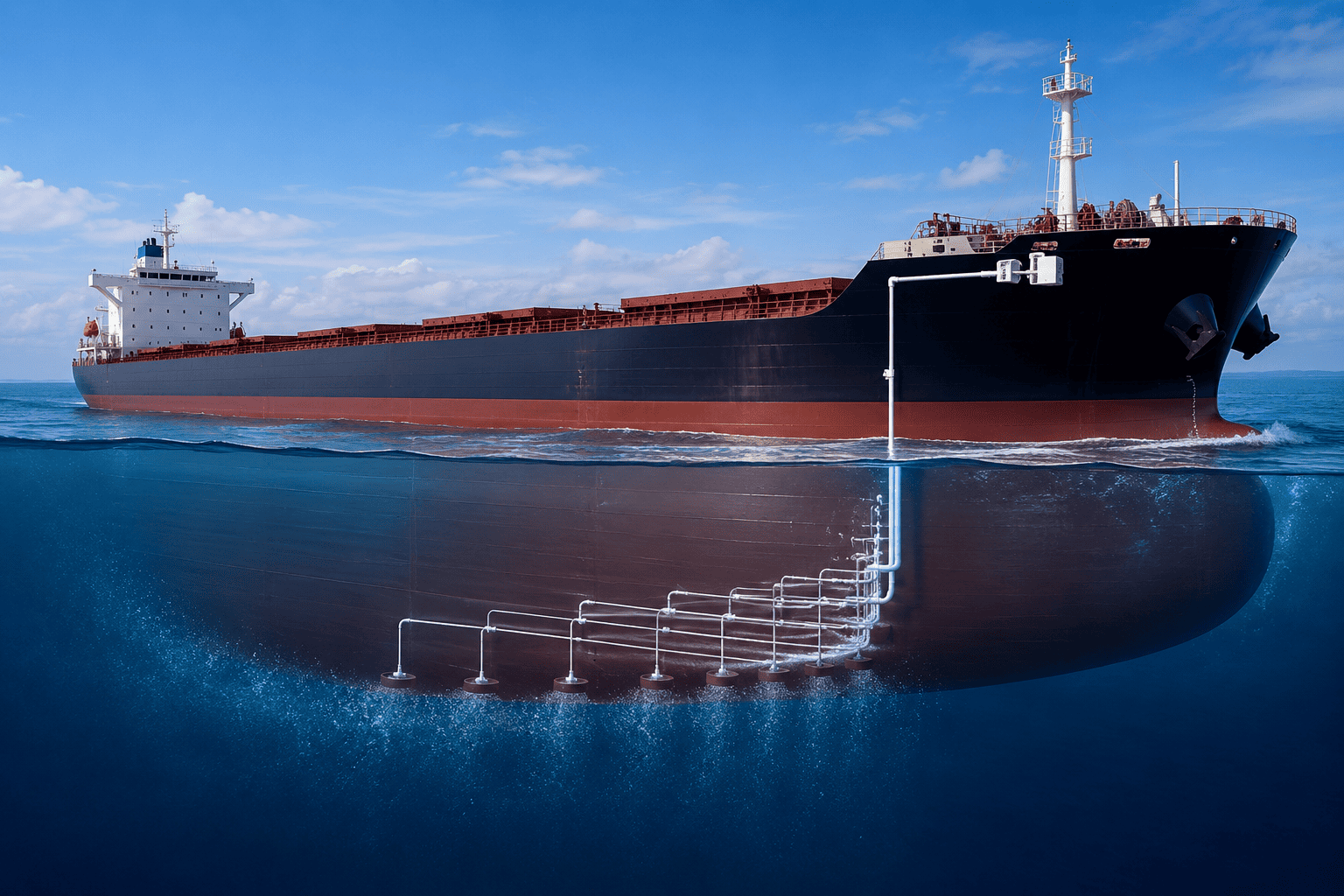
Table of contents
1. Introducción
The Lubricación por Aire es una técnica innovadora que se ha convertido en una de las principales soluciones para reducir la fricción y resistencia al avance en los buques de gran tamaño. Esta técnica utiliza un sistema de aire comprimido para crear una layer of air between the hull of the boat and the water, which significantly reduces the resistance and mejora la eficiencia energética del buque.
En este artículo, exploraremos en detalle cómo funciona la lubricación por aire (o colchón de aire), sus benefits and disadvantages, y cómo se está utilizando en la industria marítima actualmente.
1.1 Fricción y Resistencia al Avance
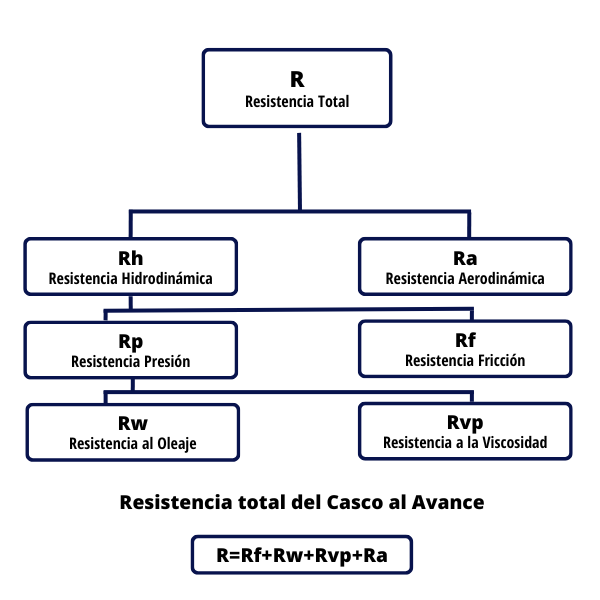
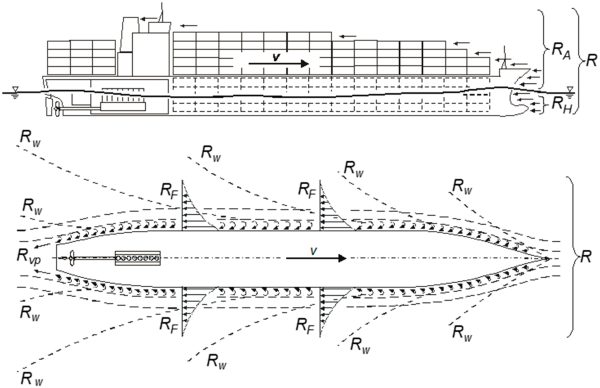
These fluids generate fuerzas hidrodinámicas and aerodinámicas that cancel each other out, creating a resistance to motion also known as drag.
The total resistance R that you experience the boat it consists of the sum of two components:
- Resistencia aerodinámica RA
- Resistencia hidrodinámica RH.
Esta última a su vez it consists of the resistance by fricción RF and the presión RP, which your time is divided into resistance wave conditions RW and resistencia por presión viscosa RVP.
To try to study the Resistance to the Advancedeveloped dos hipótesis para su cálculo, ya que desarrollar una forma lo suficientemente precisa para obtener el factor de esta resistencia es realmente complejo:
- Hipótesis de Froude
- Hipótesis de Hughes
Del desarrollo de estas hipótesis se obtiene la siguiente fórmula:
De esta manera, la fórmula para calcular la resistencia total de un barco en movimiento a través del agua es:
2. Experimentos y Estudios Precursores de la Lubricación por Capa de Aire
The primeros experimentos de reducción de la resistencia al avance con microburbujas were made by McCormick and Bhattacharyab, pioneers investigaron como reducir la fricción viscosa (Rvp) in a cuerpo de revolución completely submerged cubierto con burbujas de hidrógeno generadas por electrólisis.
Experiment teachers McCormick and Bhattacharyya (1973)
El experimento consistía en sumergir un cuerpo de revolución en el interior de un canal de ensayos hidrodinámicos a una velocidad dada. Este cuerpo contaba con una envoltura de cable de cobre, que por medio de la hidrólisis del agua, genera microburbujas de manera constante.
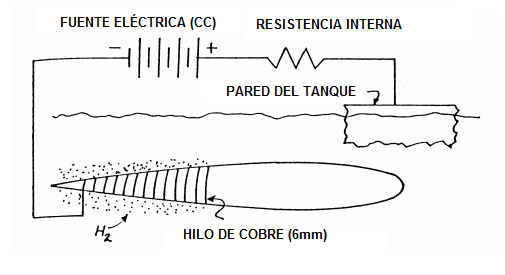
Figure 3. Esquema del Diagrama del Experimento de Microburbujas de Hidrógeno
(McCormick and Bhattacharyya)
The reported results showed that the cantidad de reducción de la fricción depende of the speed and tasa de la producción de burbujas de hidrógeno. La inyección de un flujo laminar de burbujas rodeando a un cuerpo sólido sumergido, reducía la resistencia al avance (reducción de la fricción viscosa de un 30%).
Investigación Numérica of Madavan (1985)
En 1985, Madavan llevó a cabo una investigación numérica para estudiar la interacción de las microburbujas con las estructuras de la capa límite con el fin de aclarar el mecanismo detrás de la reducción del arrastre. En su estudio, se encontró que la presencia de las microburbujas altera la viscosidad y densidad efectivas locales dentro de la capa límite.
Además, se observó una fuerte dependencia entre la reducción de la fricción y la concentración volumétrica de las microburbujas within the sublayer buffer.
Experiment of Charles L. Merkle and Steven Deutsch (1989)
In 1989, Merkle and Deutsch succeeded in a reducción de la fricción del 80% al combinar los efectos de los polímeros con las microburbujas. Sin embargo, durante las pruebas, se concluyó que la inyección de microburbujas resultaba inefectiva en condiciones de baja velocidad debido a la flotación de las burbujas.
Este experimento demostró la relación significant among the reducción de la fricción and the concentración y el diámetro de las microburbujas.
Patent Ramón García Ferreiro (1999)
En 1999, el profesor de la Escuela de Náutica y Máquinas Ramón García Ferreiro, presentaba una solicitud de patente de una publicación denominada «Buque de colchón neumático«.
Descripción de la patente:
La presente invención se refiere a la inyección o alimentación de aire de la atmósfera hacia una concavidad debajo de la quilla del buque según se muestra en la figura 1, el cual es aspirado por (1) e impulsado por un compresor (2) hasta la zona de inyección o alimentación (3) creando un colchón neumático (4) ubicado en la quilla, formado por una capa aislante de aire que sirve de asiento del buque en el agua.
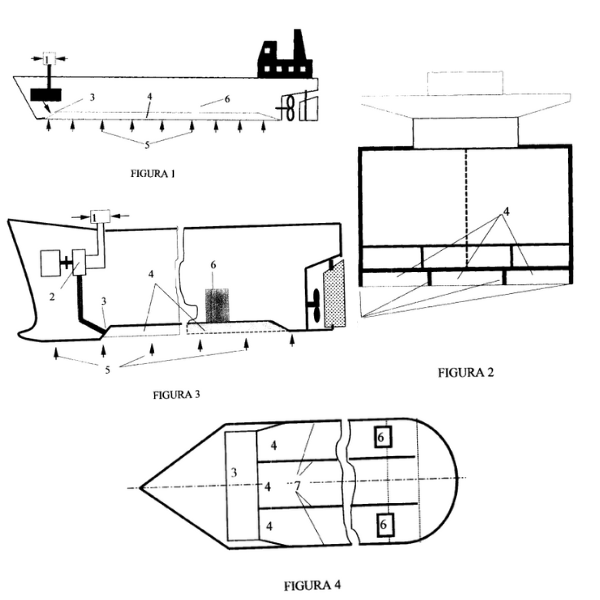
Figures of the Patent IS 2 187 229 A1
Experiment Moriguchi and Kato (2002)
In 2002, Moriguchi and Kato intentaron determinar la influencia del diámetro de las microburbujas en la reducción de la fricción. Sin embargo, sus resultados sugieren que no hay influencia del tamaño de la burbuja en el fenómeno. Es necesario realizar más experimentos para validar esta conclusión, ya que contradice otros resultados obtenidos en estudios anteriores.
En el siguiente experimento (Fig. 4), se dispone en un túnel de recirculación una pieza sometida a una inyección de aire a través de una placa porosa. Empleando unos medidores laser, se mide la dispersión de las microburbujas y se analiza la velocidad del flujo.
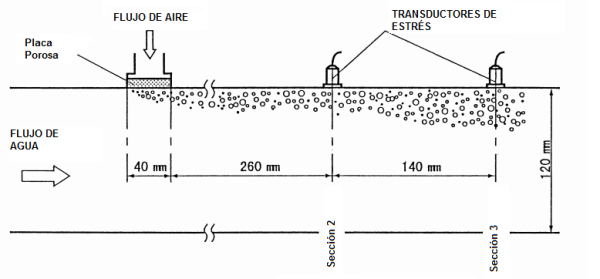
Figure 4. Scheme of the Experiment of Moriguchi and Kato
Tras el experimento se verificó que, en mediciones tomadas cerca de la superficie del casco, la velocidad disminuía. Este descubrimiento es importante porque indica que el perfil de velocidades se vuelve menos abrupto, lo que a su vez disminuye la tensión de la viscosidad, que está directamente relacionada con la forma del perfil de velocidades
Studies of Alberto Aliseda and Juan Carlos Lashera (2005)
En 2005, Aliseda y Lashera estudiaron el transporte de microburbujas en una capa límite turbulenta. Analizaron cómo las microburbujas interactúan con las estructuras turbulentas de la capa límite y cómo se distribuyen en el campo de velocidad. También examinaron cómo las microburbujas afectan la viscosidad efectiva de la capa límite y cómo esto puede influir en la reducción del arrastre en superficies sumergidas. Los resultados de su estudio proporcionaron una comprensión más profunda de la dinámica de las microburbujas en la capa límite turbulenta y su potencial para reducir la fricción en superficies sumergidas.
Como ejemplo de uno de los estudios realizados por Aleberto Aliseda y Juan Carlos Lashera, explicaremos el siguiente experimento (Fig 5) para determinar como reducir el tamaño de las burbujas para analizar su efecto sobre la viscosidad efectiva de la capa límite.
For this experiment it is necessary to inject a large amount of bubbles with a diámetro promedio de Sauter d32 ≈200 μm, ya que solo así se puede obtener una fracción de volumen lo suficientemente significativa para el estudio. Se instala un injector aluminum with a cavity longitudinal mechanized along its leading edge.
The cavity is closed with a plate-porous a través de la cual supplied compressed air from the side of the hydrofoil.
To reduce aún más el tamaño de la burbujatarget microchorros of ethanol to the plate porous along the edge of attack the hydrofoil boat, so that the ángulo de contacto de las burbujas increases, which facilitates the detachment of the plate.
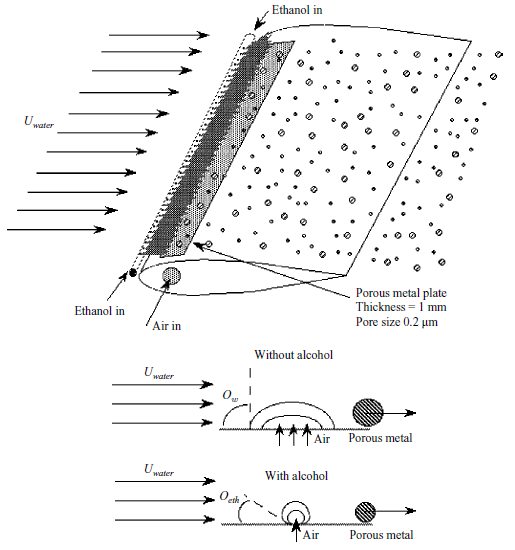
Figure 5. Sketch of the bubble generator and the mechanism of reduction of diameter
3.Métodos de Lubricación por Aire
La lubricación por aire para reducir la resistencia del casco, funciona sobre el principio que planteamos en el primer punto del artículo, que la resistencia por fricción de la superficie es proporcional a la obra viva del buque (superficie mojada del casco). Para llevar a cabo la reducción de esta fricción con la de lubricación por aire, tenemos 3 métodos:
- Método 1. Capa o Colchón de Aire (ALS)
- Método 2. Cámaras de Aire (ACS)
- Método 3. Pintura Hidrofóbica
3.1 Método de Capa o Colchón de Aire (ALS)
Para generar una capa de lubricación por aire efectiva, debemos inject the air at a constant speed to form a layer of bubbles, which reduces the drag and resistance between the boat and the sea water.
However, the effectiveness of this system depends on the following main factors:
- Tamaño de la burbuja.
- Ubicación de eyectores bubble/air
- Configuración del inyector.
- The distribución de burbujas de aire por la superficie del casco es un parámetro importante para reducir la resistencia que actúa sobre el casco.
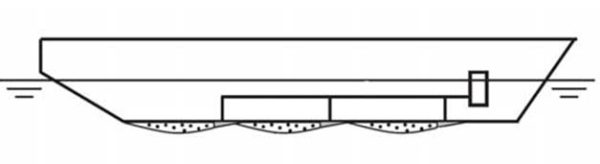
Figure 6. Esquema de Lubricación por Capa de Aire
The layer of air is formed by injecting microburbujas de un diámetro inferior a 1 mm, pero más grandes que un micrómetro. En esta técnica, se inyectan pequeñas microburbujas en la capa límite turbulenta que se desarrolla en el área de la superficie húmeda. Sin embargo, su aplicación se limita a los barcos large, as oilbecause they are very large, background and movement slow.
En la sección delantera del casco se generan múltiples capas de pequeñas bubbles that must be routed properly to flow below the boat and to decrease the drag.
To be able to generate and maintain the layer of air bubbles, it requires some auxiliary systems and modifications (Fig 7.1.), así como de una fuente de presión de aire, cuya energía está contemplada dentro del cálculo de reducción de la drag (reducción de la fricción al avance) in around 20% of although proprietary systems such as the DK Group claim between 5% and 10%.
We have, (taking as an example the figure 7.2.) of dos pares de cajas de distribución: una en el lado de babor y otra en el lado de estribor están conectadas simétricamente a una sub-línea de suministro. Las cajas están equipadas con protección contra la corrosión (ánodos de zinc).
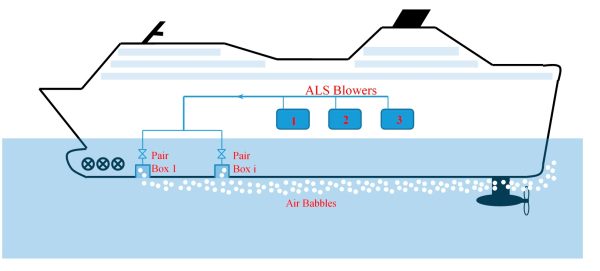
Figure 7.1 Esquema del sistema de lubricación por aire (ALS)
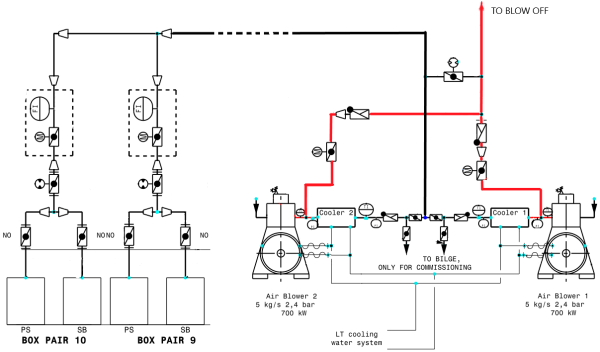
Figure 7.2 Esquema real del sistema de Lubricación por Aire
The system ALS puede aplicarse en la etapa de diseño y construirse en un nuevo buque, así como instalarse en el buque ya operativo. La introducción de ALS en un buque en operación es un proceso complicado y requiere análisis exhaustivos, cálculos, mediciones y, con mayor frecuencia, simulaciones por ordenador.
Hay varias empresas especializadas en el diseño e instalación de ALS, y cada empresa llama a este sistema bajo su denominación de marca, por ejemplo:
- Mitsubishi Co. – Sistema de Lubricación de Aire de Mitsubishi (MALS)
- R&D Engineering – Sistema de Tubo de Inducción de Aire con Alas (WAIP)
- Samsung Heavy Industries – System SAVER (SAVER Air)
- Silverstream – System Silverstream
- Foreship – Sistema de Lubricación de Aire de Foreship (Foreship ALS)
To get an idea of the effectiveness of this system, we put a real-world example of study.
The ship oil tanker chemical tanker MT Amalienborg después de instalar un system ASL Silverstream, se registraron muchos parámetros de operación when ALS was on and off, among others:
- Parámetros de operación del sistema de propulsión y velocidad of the vessel (in water,and GPS),
- Consumo de energía por los sopladores de aire
- RPM main motor
- Power of the spindle (torque)
- Consumption of fuel for the main engines.
- Condiciones climáticas (condiciones hidrometeorológicas).
En el siguiente gráfico podemos ver la comparativa entre tener el sistema ALS activo y apagado,(fig. 8)
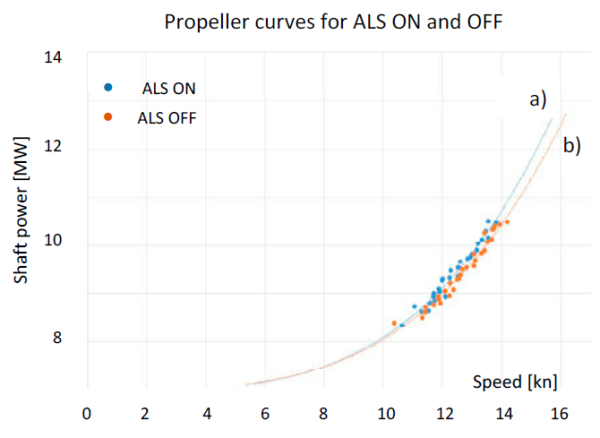
Figure 8. Gráfico Potencia / Velocidad del sistema ALS On/Off
Este gráfico muestra el impacto de operación del sistema ALS (Silverstream) instalado en el buque MT Amalienborg tomando parámetros en los cambios de potencia de propulsión (output shaft) and the speed of the ship.
El curso de los parámetros presentados en este diagrama muestra que, manteniendo una velocidad constante del motor principal, la activación del sistema ALS provoca una disminución en la demanda de potencia de propulsión y no afecta significativamente la velocidad del buque, además la parte inferior del diagrama muestra el consumo de energía por los sopladores ALS.
3.2 Método de Cámaras de Aire (ACS)
The Método de Cámaras de Aire, en inglés Air Cavity System (ACS), consiste en la implementación de una o varias cavidades de aire a lo largo del buque que son llenadas con un flujo constante de aire. Este proceso reducirá la superficie sumergida, lo que se conoce como «superficie mojada», y, por consiguiente, disminuirá la resistencia al arrastre. Se denomina a esta técnica «lubricación de cámaras de cavidad de aire». Se recomienda el uso de esta técnica en barcos que poseen una amplia superficie plana en su casco, lo que permite la instalación de grandes cámaras de aire.
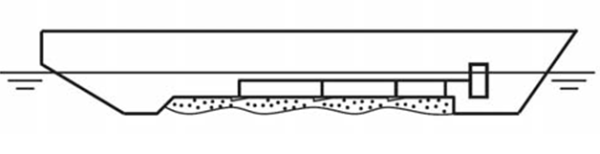
Figure 9. Esquema de Lubricación por Cavidades de Aire
Unlike the previous system, the system ACS solo puede implementarse en la fase de diseño para buques de nueva construcción, ya que las cavidades forman parte de la forma y línea del casco, there are systems or tanks to be installed.
Las cavidades de la parte inferior del casco están diseñadas para reducir la superficie mojada de la nave y así reducir la resistencia al avance.
La mejora en la reducción contra el arrastre, es decir la resistencia al avance por fricción, se encuentra en una efficiency of 5-15% (taking as a sample the data on the ship of study (ACS Demostrator)
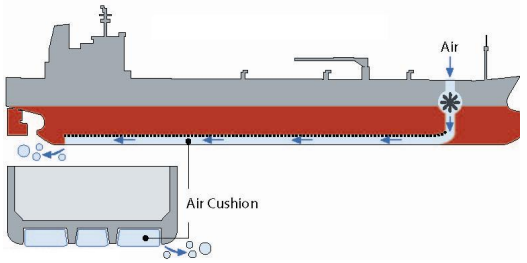
Figure 10. Esquema del Sistema Simplificado de Lubricación por Cavidades de Aire
3.3 Método de Pinturas Repelentes de Agua
Las pinturas repelentes de agua o hidrofóbicas, en realidad no son un método de lubricación de aire directa, pero si reacciona directamente con la capa límite que se forma entre el casco y el agua alrededor del barco.
The objective de este método es evitar la formación de la capa límite. Esto podría utilizarse como una característica adicional para los métodos mencionados anteriormente.
A pesar de ser un método eficaz para reducir la resistencia al avance, es un método de un high cost and a durability very small (Effectiveness approximately 1 month).
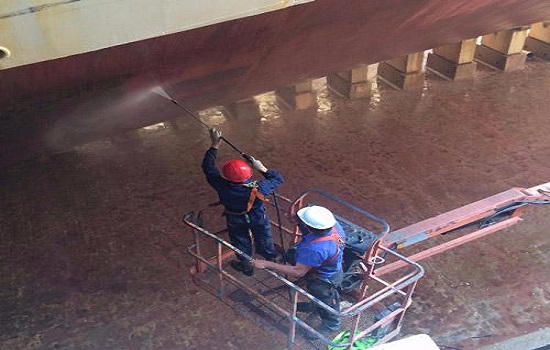
Figure 11. Blasting of the Hull (Water blasting)
Otro método eficaz para reducir la resistencia al avance en materia de paintings it is the antifouling, pero descartada totalmente en ámbito industrial por su poca durabilidad y alto coste.
5. Prototipos Instalados en Buques
Los prototipos mencionados a continuación comparten similitudes en los principios de funcionamiento.
Estos sistemas han sido diseñados para mejorar la eficiencia energética y reducir el impacto ambiental de la industria marítima, mediante la reducción del consumo de combustible y las emisiones de gases de efecto invernadero. Aunque cada uno de estos sistemas tiene un diseño y funcionamiento específico, todos comparten el objetivo de reducir la resistencia hidrodinámica del casco del buque y mejorar la eficiencia en el consumo de combustible.
5.1 Mitsubishi Air Lubrication System (MALS)
En 2010, se instalaron dos transportadores de módulos con el Sistema de Lubricación de Aire Propio de Mitsubishi (MALS), convirtiéndose en la primera aplicación en el mundo de un sistema de lubricación de aire mediante sopladores de aire en buques de navegación oceánica. MALS ha demostrado una reducción del 13% en las emisiones de CO2.
Figure 12.Vídeo explicativo del sistema MALS
5.2 DK Group Air Cavity Chambers
El sistema DK Group Air Cavity Chambers es un sistema de ahorro de combustible para buques que utiliza cámaras de aire para reducir la fricción y el arrastre hidrodinámico del casco del buque. El sistema se basa en el principio de que la creación de una cámara de aire debajo del casco del buque reduces the resistance of the water and, therefore, fuel consumption.
Las cámaras de aire se crean mediante la instalación de placas en la parte inferior del casco del buque. Estas placas tienen pequeñas perforaciones que permiten que el agua fluya a través de ellas, lo que crea una capa de aire debajo del casco. Esta capa de aire reduce la fricción y el arrastre del agua, lo que permite al buque moverse con mayor facilidad y eficiencia.
The system DK Group Air Cavity Chambers has been shown to be efectivo en la reducción del consumo de combustible y las emisiones de gases de efecto invernadero en los buques. Además, el sistema es relativamente fácil de instalar en buques existentes y no requiere cambios significativos en el diseño del casco. This makes it attractive to shipping companies that seek to improve the efficiency of their operations and reduce their environmental impact.
Tal como hablamos en el punto 3.2, el prototipo de este tipo de sistemas se llevó a cabo en el buque ACS Demostrator. The developer, DK Group ensures a reducción del consumo de combustible entre un 5%-10%
Figure 13.Vídeo explicativo del prototipo DK Group Air Cavity Chambers
5.3 System Silverstream
El sistema Silverstream es un sistema de propulsión de aire comprimido diseñado para reducir el consumo de combustible y las emisiones de gases de efecto invernadero en buques mercantes. El sistema utiliza un compresor de aire para capturar y comprimir el aire del océano mientras el buque se desplaza. Luego, este aire comprimido se utiliza para reducir la resistencia hidrodinámica que enfrenta el casco del buque y mejorar su eficiencia en el consumo de combustible.
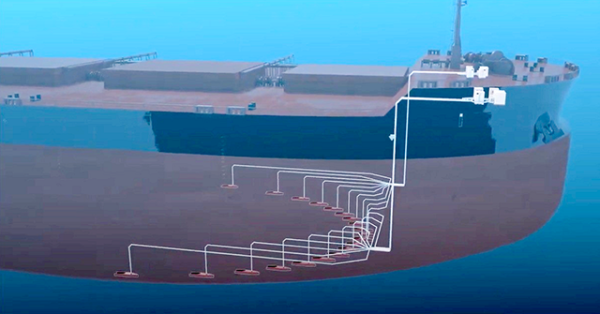
Figure 14. System Silverstream
The system works by the creación de burbujas de aire en el casco del buque, which reduce la fricción entre el agua y el casco. Esto permite que el buque se desplace con mayor facilidad a través del agua y reduzca la energía necesaria para moverlo. El sistema también puede reducir significativamente las emisiones de dióxido de carbono (CO2) y óxidos de nitrógeno (NOx) producidos por los motores del buque.
Además, el sistema Silverstream no requiere cambios significativos en el diseño del casco del buque, lo que lo hace fácil de instalar en buques existentes. También se ha demostrado que el sistema es rentable en términos de ahorro de combustible y reducción de emisiones, what makes it attractive to shipping companies that are looking to improve their operational efficiency and reduce their environmental impact.
5.4 Sistema de Tubo de Inducción de Aire con Alas (WAIP)
The system WAIP works by instalación de una serie de tubos de inducción de aire en el casco del buque. Estos tubos están equipados con un diseño de ala que capta el aire en movimiento a medida que el buque se desplaza a través del agua. El aire capturado se dirige hacia los motores de combustión interna del buque, lo que permite que los motores quemen una mezcla más rica de aire y combustible, mejorando así la eficiencia del combustible and reducing emissions of greenhouse gases.
El sistema WAIP ha demostrado ser efectivo en la reducción del consumo de combustible y las emisiones de gases de efecto invernadero en los buques. Además, el sistema es relativamente fácil de instalar on existing vessels and no requiere cambios significativos en el diseño del casco. También es compatible con una variedad de tipos de combustibles, lo que lo hace adecuado para su uso en una amplia gama de buques.
5.5 Sistema SAVER (SAVER Air)
The System SAVER (SAVER Air) is a fuel saving system for ships using a device called SAVER to reduce the resistance of the water on the hull of the ship. El dispositivo SAVER está compuesto por una serie de láminas paralelas que se colocan en la parte inferior del casco of the ship, creating a space of air between them and the hull.
El sistema funciona mediante la creación de un espacio de aire debajo del casco del buque que reduce la resistencia hidrodinámica. Esto permite que el buque se mueva con mayor facilidad a través del agua y reduzca la energía necesaria para moverlo.
The system SAVER is relatively fácil de instalar en buques existentes y no requiere cambios significativos en el diseño del casco.
5.6 Air Max Air Cushion System (Stena Bulk)
The Air Max Air Cushion System is a sistema de cojín de aire desarrollado por la compañía naviera Stena Bulk para mejorar la eficiencia de combustible y reducir la resistencia hidrodinámica de los buques. Este sistema utiliza un colchón de aire que se bombea debajo del casco del buque, lo que allows the vessel to float on a layer of air in place of water, reduciendo la fricción between the water and the hull of the ship.
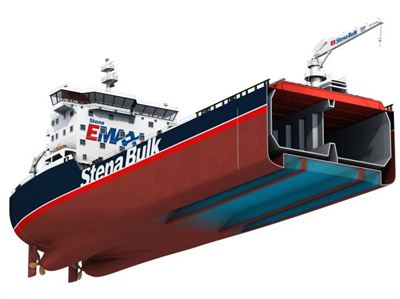
Figure 15. System Stena Bulk
The Air Max Air Cushion System is composed of a serie de cámaras de aire instaladas debajo del casco del buque. Estas cámaras de aire se inflan mediante un sistema de bomba de aire, creando un colchón de aire que levanta el buque por encima del agua y reduce la fricción entre el casco del buque y el agua.
6. Diseño de un Sistema de Lubricación por Aire
El diseño de un sistema de lubricación por aire es un proceso complejo que implica la selección de los componentes adecuados para garantizar un funcionamiento seguro y eficiente. A continuación se describen los principales componentes y consideraciones que deben tenerse en cuenta en el diseño de un sistema de lubricación por aire.
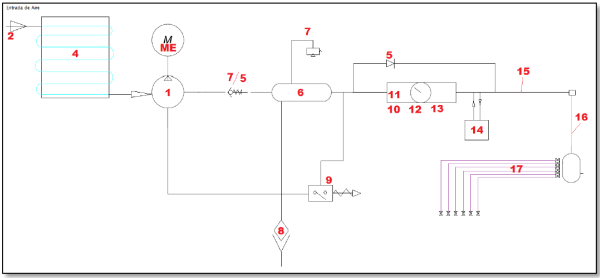
Figure 16. Esquema básico de un sistema de Lubricación por Aire
1. Grupo de compresores y su motor eléctrico (M.E) de 15HP.
2. Filter aspirated air.
3. Ventilación de la habitación.
4. Refrigerators and hair dryers.
5. Válvula antirretorno.
6. Acumulador de aire, depósito principal.
7. Válvula de seguridad. Limitador de presión.
8. Trap manual.
9. Presostato. Al alcanzar el depósito la presión máxima, manda una señal de paro al motor.
10. Manómetro del depósito.
11. Manómetro del sistema.
12. Filter.
13. Regulator.
14. Lubricator/Degreaser.
15. Tuberías fijas rígidas.
16. Tuberías desmontables rígidas PVC.
17. Tuberías de sistema alimentación principal.
6. Bibliografía
- Effect of buoyancy on the dynamics of a turbulent boundary layer laden with microbubbles. Aurotres: A. Aliseida y J.C. Lasheras. Article in Journal of Fluid Mechanics · July 2006
- Air Lubrication [Scheepvaart In Transport College] [Hogeschool Voor de Zeevaart].
- Estudo Experimental de una capa límite turbulenta con microburbujas. Memories of the XVI International Congress of the Annual SOMIM. Nuevo León. México
- Estudio de la lubricación por colchón de aire en el casco de un buque. Autor: Pau Capella Costa. [TFG- Facultat de Náutica de Barcelona. Universitat Politécnica de Catalunya].
- Estudio métodos de predicción de resistencia al avance. Autor: Ignacio Fabregas Claramunt. [TFG- Facultat de Náutica de Barcelona. Universitat Politécnica de Catalunya].
- Sistemas de reducción de la resistencia al avance en la navegación mediante una layer of air between the hull and the water. Author: Alejandro J. Medina Guerrero [TFG- Facultat de Náutica de Barcelona. Universitat Politécnica de Catalunya].
- International Conference on Ship Drag Reduction (SMOOTH-Ships). Istanbul Technical University.
- Assessment of the Propulsion System Operation of the Ships. Equipped with the Air Lubrication System. Author: Mariusz Giernalczyk and Piotr Kaminski.
- DK Group Improving efficiency by retrofitting of an existing vessel with ACS air lubrication system.
- CFD investigation of ALS
- technique on frictional drag reduction of bulk carrier. Siemens Digital Industries Software.
- Research Progress of Air Lubrication Drag Reduction Technology for Ships. Author: Hai'an, Haozhe Bread and Po Yang. College of Aerospace and Civil Engineering, Harbin Engineering University. China
- Drag reduction by microbubble injection in a channel flow. Revista Mexicana de Física 54 (1) 8–14 Febrero 2008.
- Glossary of Terms [Lubrication Equipment Division. Draco].
- (News) It receives a ship that produces bubbles of air in the helmet to reduce emissions [www.argenports.com.ar.
- Microbubble Drag Reduction in Liquid Turbulent Boundary Layers. American Society of Mechanical Engineers
- (Vídeo) MALS (Mitsubishi Air Lubrication System) – green ship technology for energy saving by air carpet.
Author: Roberto García Soutullo







Excellent theme, there are already applications of this system.
Thank you.
Luis Avalos L.
Excellent theme I am a professor of the School of National Nautica Argentina I'm in charge of the courses of Termodinamica and theory of the propulsónsion for ingenenieros marine who aspire to be promoted to Chief engineer, One of the themes of the theory of propulsion is resvalamiento , ( theory of almirantasgo , Froud etc som part of this course ). What is presented in this publication is of much value to my classes. I beg your wish or send me all the information to be able to transfer it to my alunmos, if possible.
I remain attentive to your comments
Thanks
Excellent post
many thanks